

.svg)
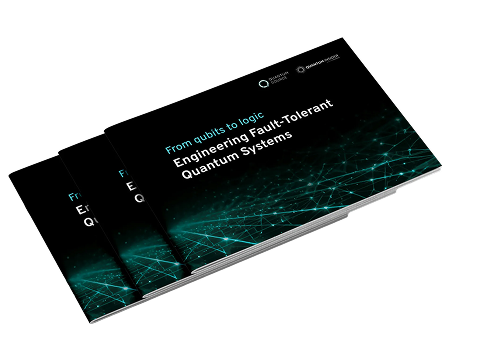
Engineering fault-tolerant quantum computing is now an urgent engineering problem, not a distant theory. Logical qubits are starting to beat physical qubits, and five hardware platforms are racing toward million‑qubit scale—each with different constraints and risks.
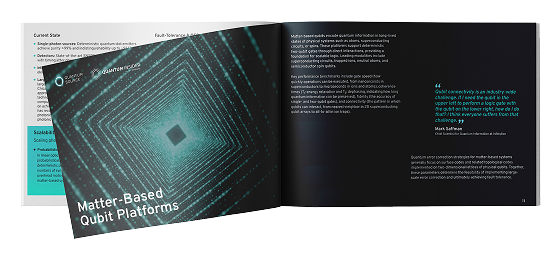
Engineering Fault-Tolerant Quantum Systems gives you a clear, side‑by‑side view of where each modality stands, what error‑correction really demands, and how Quantum Source’s deterministic atom–photon architecture fits into the picture. Download the report to benchmark your roadmap, stress‑test investment or policy decisions, and see where focused engineering effort will actually move the needle.

Explore a dual-axis classification system that organizes the hardware landscape by the physical nature of the qubit (matter-based vs. photon-based) and the computational model (circuit-based vs. measurement-based, MBQC). This framework clarifies the differing constraints, advantages, and scaling trajectories across the field.
.png)
Assess performance benchmarks, QEC milestones, control requirements, and scaling obstacles across Superconducting Qubits, Trapped Ions, Neutral Atoms, Semiconductor Spins, and Photonic Qubits. The report shows that no single qubit technology satisfies all requirements for fault-tolerant scale, reinforcing the need for strategic diversification across platforms—even as certain modalities, including photonics, offer uniquely strong scaling pathways.
.png)
Understand why photonic qubits, despite advantages such as room-temperature operation, compatibility with semiconductor manufacturing, and natural networking, remain constrained by probabilistic entanglement, which create extreme resource overheads in conventionalphotonic MBQC.
.png)
Examine Quantum Source’s deterministic atom–photon architecture, which uses single trapped atoms as intermediary entanglement nodes. This hybrid design enables the deterministic generation of large photonic cluster states, addressing the core bottleneck of two-photon probabilistic fusion.
Logical qubits will increasingly outperform physical ones.
A million-qubit system is moving from theoretical aspiration to realistic engineering target over the next decade.
Sustained progress will depend on a balanced strategy that supports diverse hardware approaches—including hybrid atom–photon innovations that may unlock new scaling pathways.